


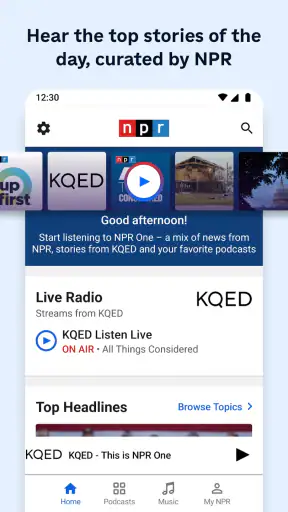
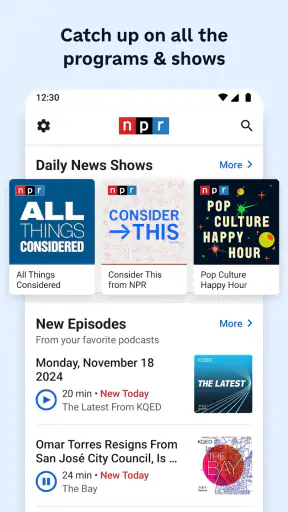
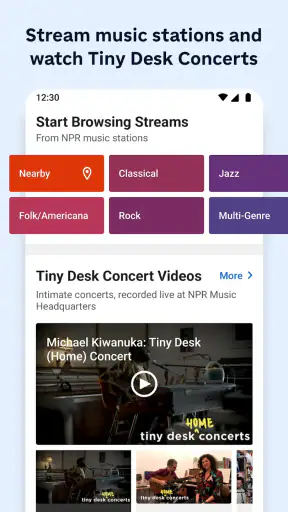

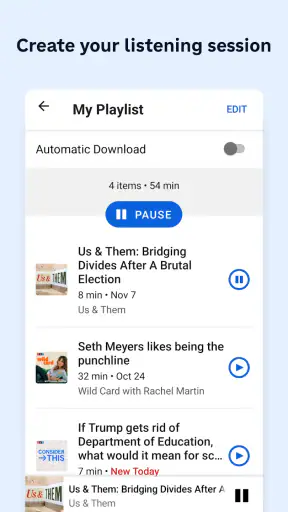
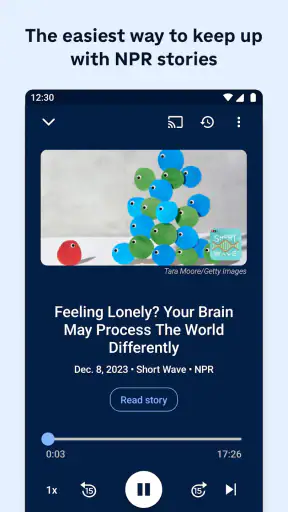
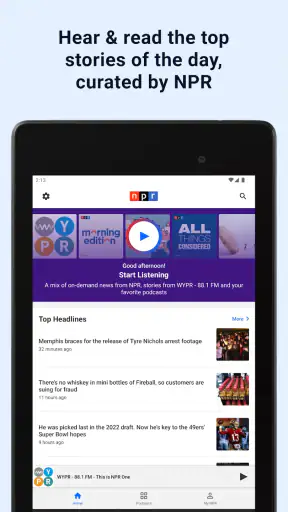
I spent time with NPR: National & Local News as a daily news and audio app, and its biggest appeal became clear very quickly: it fits naturally into moments when reading a full article is inconvenient. Instead of treating news as something I have to sit down and study, the app lets me move between reporting, radio, podcasts, and music depending on how much attention I have available.
That flexibility matters more than it may sound. A morning commute, a short lunch break, household chores, and a quiet evening all call for different kinds of listening or reading. NPR’s app is strongest when it becomes a dependable part of those routines rather than a place I open only when a major story breaks. It is free, aimed at Everyone, and developed by NPR, so the barrier to trying it is low for anyone looking for a more focused alternative to a noisy general news feed.
What makes the first week appealing
During the first few days, I found the combination of news, live radio, podcasts, and music more useful than relying on separate apps. The experience feels built around public-radio habits: I can check what is happening, switch to spoken audio, or leave something playing while my hands are occupied. That makes it particularly comfortable for people who already enjoy NPR’s style of reporting and want one familiar place for it.
The app’s appeal is not simply that it contains several media types. The useful part is being able to choose the right format for the situation. When I have a few minutes, reading is more efficient. When I am cooking or walking, audio is easier. When I want a broader sense of the day, live radio gives the experience a steady flow instead of asking me to select every item myself.
That makes it different from a conventional newspaper app, where the main activity is scanning headlines and opening articles. It also differs from a podcast-only player, because the news experience is not limited to episodes I have deliberately queued. Compared with a social media feed, it feels less reactive and less dependent on whatever happens to be trending at that exact moment.
I also appreciate that the app does not need to be treated as an all-or-nothing replacement for other services. I can use it for public-radio listening while keeping a separate app for local newspapers, specialist publications, or podcasts from unrelated networks. In practice, that makes the first week easier: there is no pressure to force every information need into one product.
A realistic everyday routine
A routine that worked well for me was to begin the day with a quick look at the news, then move to audio while getting ready. Later, a podcast could fill a longer stretch of time, while live radio worked better when I wanted continuous listening without making another decision. This sequence gives the app recurring value because each part serves a different moment rather than repeating the same headline list.
For someone who wants to stay informed without constantly checking a phone, that workflow is a real strength. The audio options make it possible to reduce screen time, while the written side remains available when I want to verify details or read at my own pace. I would especially recommend trying this approach instead of opening the app randomly throughout the day; its formats make more sense when assigned to different parts of a routine.
The early experience is also helped by the app’s broad reach. It has passed five million installs and holds a 4.8 average rating from roughly 38 thousand ratings, which suggests that many people find the overall package dependable. Those figures do not tell me whether every listener will agree with its editorial approach, but they do match my impression that the app is polished enough to become familiar quickly.
Where the first impression is less convincing
The same range of choices that feels generous at first can also make the experience less focused. A user who wants only a simple breaking-news feed may find the mix of formats broader than necessary. Podcasts, radio, music, and written news each encourage a different kind of attention, so the app can feel like a small media hub rather than a single-purpose news reader.
That is not a serious flaw, but it affects who should install it. If I wanted only fast headlines, I would prefer a more specialized news app. If I wanted deep control over podcast subscriptions and playback organization, I would look toward a dedicated podcast player. NPR works best for people who value the connection between journalism and listening, not for someone searching for the most minimal tool possible.
Why it can remain useful month after month
Novelty fades quickly in news apps, so the important question is whether the product still earns attention after the first week. In my experience, NPR has a better chance than many headline-driven apps because its recurring value does not depend entirely on discovering something new in the interface. The lasting habit comes from returning to familiar formats at useful times.
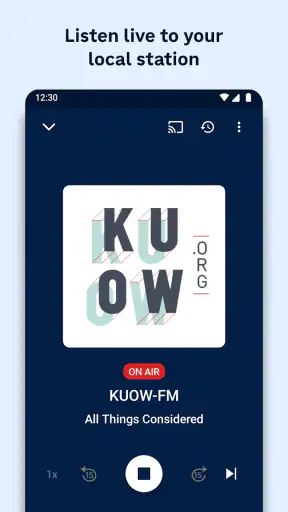
Live radio is central to that habit. It gives me a way to listen without building a queue, which is valuable when I want company or context rather than a specific episode. Podcasts serve the opposite need: they are better when I already know the subject or style I want. Written reporting fills the gap when I need control over speed and detail. The three modes make the app adaptable across ordinary weeks.
That variety also helps prevent the common problem of a news app becoming emotionally exhausting. I can choose a short reading session instead of allowing an endless feed to dictate how long I stay. On another day, I can listen while doing something else and avoid the visual pull of repeated scrolling. The most sustainable habit is choosing a format before opening the app, because that keeps the visit purposeful.
How I would use it for different needs
For a listener who wants a daily news rhythm, I would use the radio side as the default and turn to articles when a particular subject deserves closer attention. For a podcast fan, I would treat the app as a convenient NPR-focused catalog while keeping a broader player for shows from other sources. For someone who follows national stories but also wants community relevance, the local-news angle may make the app more useful than a purely national publication.
It is also a reasonable choice for households with different listening habits. One person may prefer spoken news, another may want music, and another may read articles silently. The app’s range allows each person to use it differently without requiring a separate news brand for every situation. That said, it should not be mistaken for a complete replacement for a local newspaper or a specialist source. I would still consult dedicated outlets when a story requires highly local reporting, technical expertise, or a perspective outside NPR’s editorial world.
The app’s free price is important for long-term use. I can keep it available without making it compete with another monthly subscription, which lowers the cost of maintaining the habit. Free access also makes it easier to recommend to a friend who is curious about public radio but does not want to commit to a paid news service immediately.
What gives it lasting value
Its lasting value comes from reducing friction between wanting information and finding the right way to consume it. I do not always want to read, and I do not always want passive audio. A service that supports both can remain relevant even when my schedule changes. That is a more durable advantage than a flashy launch feature because it is tied to everyday behavior.
Another strength is the app’s suitability for intentional listening. Many general news platforms encourage rapid switching between topics, while NPR’s mix makes it easier to settle into a program or story. I found that useful on days when I wanted more context and less headline churn. The trade-off is that users who prefer extremely fast, highly personalized updates may experience the app as slower or less immediately tailored.
The public-radio identity also shapes the experience. Some people will see that as a reason to return because they trust the tone, pacing, and editorial character. Others may want a wider ideological or international range and should build a broader news routine elsewhere. I would not use any single news app as my only source, including this one; its best role is as a strong anchor in a varied information diet.
Maintenance, friction, and sources of fatigue
The maintenance burden is fairly light because the app is free and can serve several roles without requiring much setup. The real work is not technical maintenance but attention management. News is constantly changing, and an app that combines live content with on-demand material can tempt me to keep checking even when I have already consumed enough for the day.
My practical solution is to give each visit a limit or a purpose. I might open it to hear live radio during a routine task, read one developing story, or choose a podcast for a walk. Without that boundary, the variety can become a reason to continue browsing. This is a useful distinction: the app does not feel difficult to maintain, but it does require a little discipline if I want news to remain helpful rather than overwhelming.
Another potential source of fatigue is repetition. Major stories can appear across written reporting, radio coverage, and podcast discussions. Seeing the same subject in several formats can be useful when each adds context, but it can also feel like the app is circling one topic. When that happened, switching from headline browsing to a specific program worked better than continuing to scan.
There is also a trade-off between convenience and breadth. The more I rely on NPR for audio and general news, the more likely I am to stay within its editorial ecosystem. That creates a coherent experience, but it can narrow the range of voices I encounter if I do not deliberately use other sources. I would recommend pairing it with a local outlet and at least one publication that covers subjects NPR does not emphasize as heavily.
Who should skip it
I would skip this app if my only goal were ultra-fast alerts, stock-market coverage, sports specialization, or a highly customizable international news dashboard. It is also not the best fit for someone who dislikes spoken news, never listens to radio, and wants a strictly text-based reading tool. In those cases, the combination that makes NPR distinctive becomes unnecessary overhead.
I would also hesitate to recommend it as the sole choice for someone who needs comprehensive local reporting in a particular town. The app can be a useful part of a local-news routine, but a dedicated regional publication may provide more depth for school boards, neighborhood decisions, transport changes, or community events. The right comparison is not whether NPR replaces every alternative; it is whether its mix of national reporting and audio improves the way you already consume news.
Small habits that improve the experience
First, I would decide whether a visit is for reading, listening, or discovery before opening the app. That simple choice avoids drifting between formats. Second, I would use live radio when I want a continuous stream and podcasts when I want a defined subject, rather than treating them as interchangeable. Third, I would reserve articles for stories where I want to slow down, compare details, or return to a specific point.
Finally, I would avoid judging the app only by its busiest news moments. Its real test is an ordinary week with no personal reason to search for headlines. If I still find myself using the radio during chores, choosing a podcast for a walk, or reading a story when I have a few quiet minutes, then the app has earned a place in my routine. That is a better measure of value than an impressive first session.
My long-term verdict
After the initial appeal wears off, NPR remains worthwhile because it supports a repeatable habit instead of relying on novelty. The combination of news, live radio, podcasts, and music gives me several practical entry points, and the free price makes keeping it installed easy. Its strong user response is reflected in about 9.9 thousand written reviews alongside the high average rating, while its Everyone age classification also makes it approachable for a broad audience.
I would recommend it to readers who want a calmer, audio-friendly way to follow current events and who appreciate having public-radio content close at hand. It is especially good for routines built around commuting, cooking, walking, or short breaks. I would not recommend using it as a complete information universe, and I would steer highly specialized readers toward dedicated alternatives for narrow topics or deeper local coverage.
My final judgment is that NPR: National & Local News earns lasting space when I use it deliberately. It is not the most focused tool for every kind of news consumer, and its range can sometimes encourage unnecessary browsing. But for someone who wants one free app that can move between reading and listening without feeling like a generic headline machine, it offers recurring value well beyond the first-week curiosity.


